
Your team is already using ChatGPT. The only question is whether they're doing it through accounts you control, with your data protected, or through personal accounts where contracts, client details, and internal numbers quietly leave the building. That's the problem a Private GPT solves, and it's why companies like K3 Technologies had us build one instead of handing everyone a public chatbot login.
Here's what a Private GPT actually is, when it makes sense, and what we learned building one for a real client.
What a Private GPT actually is
A Private GPT is a ChatGPT-style assistant that belongs to your company. Same conversational experience your team already knows, with three differences that matter:
- Your data stays private. Conversations and documents aren't feeding someone else's platform. What happens in your GPT stays in your infrastructure.
- It's model-agnostic. Under the hood it can run whichever AI model fits the task, and swap as better models ship. You're never locked to one vendor's roadmap.
- It knows your business. Because it's yours, it can be connected to your documents and workflows, so answers come back in your context, not generic internet knowledge.
Why K3 Technologies went private
K3 Technologies wanted their team using AI daily without the data question hanging over every prompt. We built them a private, secure GPT with automated CI/CD deployment and custom workflows built in, so it's not just a chat window, it's part of how work gets done. The full story is in the K3 Private GPT case study.
The unspoken driver: shadow AI
In most companies, employees are already pasting work content into personal AI accounts. Banning it doesn't work; people just hide it. Giving the team a sanctioned, private alternative that's just as good is the only policy that actually sticks.
When a Private GPT makes sense
- You handle sensitive information: client records, legal matters, financials, health data, proprietary designs.
- Your team already uses AI daily and you'd rather govern it than pretend it isn't happening.
- You want AI connected to internal knowledge without shipping that knowledge to a third party.
- You want to own the asset: one build you control, instead of per-seat subscription pricing that grows forever.
If none of those apply, the public tools are fine. This isn't a product everyone needs. It's the right call when privacy, ownership, and integration actually matter to how you operate.
Want AI your team can actually use with real data?
We'll look at how your team uses AI today and tell you honestly whether a Private GPT is worth building for your situation.
Get a scoped estimateThe bottom line
AI adoption inside your company is going to happen with or without you. A Private GPT turns that from a data risk into an owned asset: the familiar chat experience, your security posture, your workflows, your choice of models. Learn more about our approach on the Private ChatGPT service page.
Frequently Asked Questions
What is a Private GPT?
A Private GPT is a ChatGPT-style assistant that belongs to your company. It gives your team the same conversational AI experience, but your data stays in your infrastructure, it can run whichever AI model fits the task, and it can be connected to your internal documents and workflows.
Why build a Private GPT instead of using ChatGPT?
Three reasons: data privacy, since conversations and documents never feed a third-party platform; model flexibility, since a private build can swap models as better ones ship; and integration, since it can be wired into your internal knowledge and workflows. It also converts a forever per-seat subscription into an asset you own.
Does every company need a Private GPT?
No. If you don't handle sensitive data and don't need AI connected to internal systems, public tools are fine. A Private GPT is the right call when privacy, ownership, and workflow integration genuinely matter to how you operate, or when employees are already pasting sensitive work into personal AI accounts.
Ready to Transform Your Business?
See how AI automation can help scope practical workflow improvements and measurable business-case assumptions.
Book Operations ReviewAbout HummingAgent Team
Written by the HummingAgent team. HummingAgent is a Denver-based AI consulting company that designs, builds, and runs custom AI systems for businesses across the United States, and won the TMC 2025 AI Agent Product of the Year award. The team is led by a former Comcast Labs engineer who built production AI across 1,600 data centers and 40,000 technicians.
Popular implementation paths
Turn this AI idea into a scoped workflow
Compare the related service pages and practical guides buyers most often use after reading our AI automation articles.
Related Articles
They Didn't Want an AI Pitch. They Wanted the Job Booked. Three Questions to Ask Before Buying Any AI Tool
At The Fence Show in Las Vegas I was ready to explain how our AI worked. The contractors wanted to know whether it would book jobs and what their office would stop chasing. Here are the three questions I'd ask any vendor, including us.
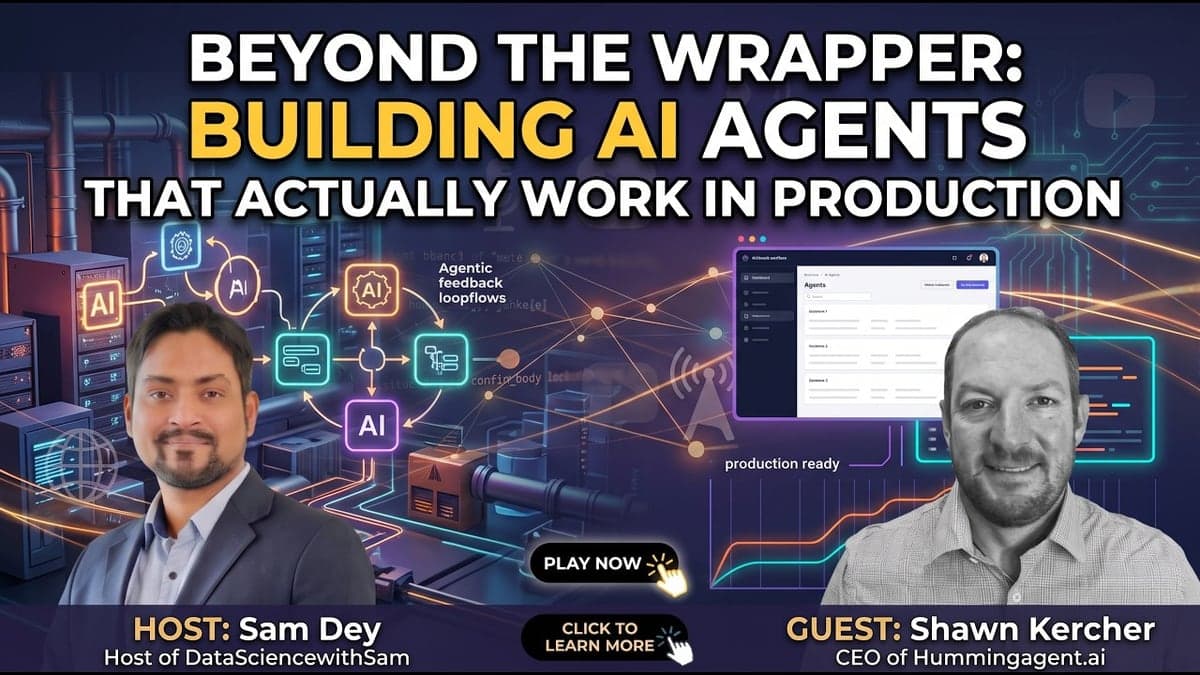
Is It an AI Agent or a ChatGPT Wrapper? One Test, and What It Takes to Build on the Right Side of the Line
Most AI products are a UI on top of a frontier model, dressed up as an agent. Here's the test: if the model provider adds this feature next quarter, does your product still exist? What I told Sam Dey on DataScienceWithSam about building things a business can run on every day.
Why Your Team Won't Update the CRM (and the Step to Remove Instead of Reminding Them)
One person told me their team relies on the CRM for everything. Another said phone messages still get written on sticky notes. Both are true. Before you send another "please update the CRM" reminder, ask whether the update is recording or copying.