
Somewhere in your business there's a task that takes hours and shouldn't. For the Jury Verdict Reporter of Colorado (JVRC), it was searching decades of case archives: 10 to 20+ hours to find relevant cases, and results that lived or died on remembering the exact terminology used years ago. We rebuilt that search with AI. Now it takes seconds. Here's why that kind of win never comes from an off-the-shelf tool.
The "hours that should be seconds" problem
JVRC publishes jury verdict data that Colorado attorneys rely on to value cases. The archive is the product. But finding anything in it meant keyword searching across decades of records, and keywords fail in a specific, painful way: if the original entry said "cervical strain" and you searched "neck injury," you missed it. Missed cases meant incomplete research, and hours of repetitive searching per request was just the cost of doing business.
Notice what kind of problem this is. It's not "we need a chatbot." It's "our most valuable asset is locked behind a search that doesn't understand meaning." No subscription tool fixes that, because no subscription tool knows your archive.
What we built
- AI-powered semantic search over the full archive, so "neck injury" finds the cervical strain cases too. Searches that took hours now return in seconds, with 100% of the archive accessible.
- An admin panel with case management, so the team runs the product without a developer in the loop.
- Automated Stripe billing and subscriptions, turning the improved search into a self-serve product with recurring revenue instead of a manual request queue.
That last item is the part people miss. The AI search was the headline, but the automation around it, billing, subscriptions, admin, is what turned a better search into a better business. Full details in the JVRC case study.
How to spot this problem in your own business
Ask: where do we search, cross-reference, or look things up by hand? Anywhere a person spends hours finding information that already exists inside your company, custom AI can usually collapse that to seconds. Archives, contracts, tickets, job histories, inspection records, product specs. The pattern is everywhere once you look.
Why custom beat off-the-shelf here
Could JVRC have bought a generic "AI search" subscription? The demos look great. But their value is in decades of domain-specific records with domain-specific language, and their business model needed billing, subscriptions, and admin tooling wrapped around the search. Generic tools do one slice; the business needed the whole system, built once, owned outright. That's the difference between renting a feature and owning an asset.
What's your hours-to-seconds task?
Tell us where your team burns hours finding or re-typing information that already exists. We'll tell you honestly whether AI can collapse it, and what that build looks like.
Get a scoped estimateThe bottom line
The best AI projects aren't about adding something new. They're about removing friction from something you already do every day. JVRC already had the archive, the customers, and the demand. Custom AI just removed the hours standing between them. Look for the task in your business where the information exists but the finding is slow. That's where the win is hiding.
Frequently Asked Questions
How does AI semantic search differ from keyword search?
Keyword search only finds exact matches: search 'neck injury' and you miss records that say 'cervical strain.' Semantic search understands meaning, so related terminology surfaces automatically. For JVRC, that meant searches that took 10 to 20+ hours now return in seconds with the full archive accessible.
What kinds of businesses benefit from custom AI search?
Any business where people spend hours finding information that already exists internally: legal archives, contracts, support tickets, job histories, inspection records, product specs. If the information exists but the finding is slow, custom AI search can usually collapse hours into seconds.
Why build custom AI search instead of buying a subscription tool?
Generic AI search tools don't know your domain language or your records, and they only cover one slice of the workflow. JVRC needed the search plus billing, subscriptions, and admin tooling wrapped around it. Building custom meant owning the entire system as an asset instead of renting a feature forever.
Ready to Transform Your Business?
See how AI automation can help scope practical workflow improvements and measurable business-case assumptions.
Book Operations ReviewAbout HummingAgent Team
Written by the HummingAgent team. HummingAgent is a Denver-based AI consulting company that designs, builds, and runs custom AI systems for businesses across the United States, and won the TMC 2025 AI Agent Product of the Year award. The team is led by a former Comcast Labs engineer who built production AI across 1,600 data centers and 40,000 technicians.
Popular implementation paths
Turn this AI idea into a scoped workflow
Compare the related service pages and practical guides buyers most often use after reading our AI automation articles.
Related Articles
They Didn't Want an AI Pitch. They Wanted the Job Booked. Three Questions to Ask Before Buying Any AI Tool
At The Fence Show in Las Vegas I was ready to explain how our AI worked. The contractors wanted to know whether it would book jobs and what their office would stop chasing. Here are the three questions I'd ask any vendor, including us.
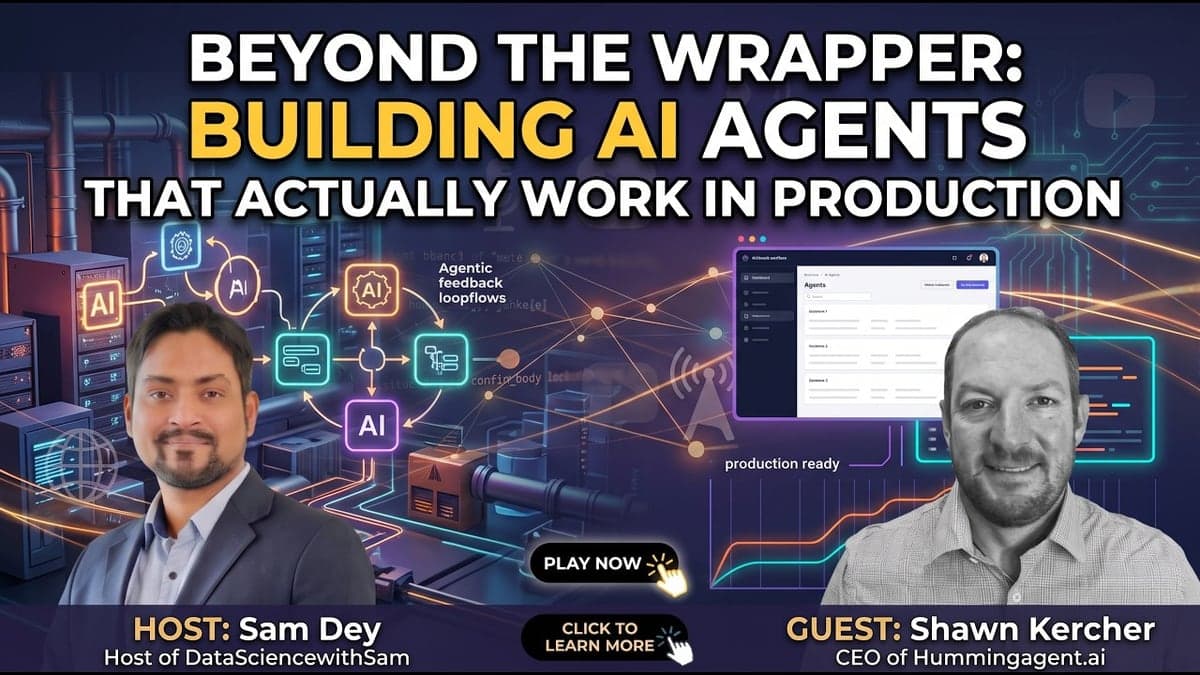
Is It an AI Agent or a ChatGPT Wrapper? One Test, and What It Takes to Build on the Right Side of the Line
Most AI products are a UI on top of a frontier model, dressed up as an agent. Here's the test: if the model provider adds this feature next quarter, does your product still exist? What I told Sam Dey on DataScienceWithSam about building things a business can run on every day.
Why Your Team Won't Update the CRM (and the Step to Remove Instead of Reminding Them)
One person told me their team relies on the CRM for everything. Another said phone messages still get written on sticky notes. Both are true. Before you send another "please update the CRM" reminder, ask whether the update is recording or copying.